
· by Michael Blair, Nashville's Pest Control
Bed bugs have nothing to do with how clean a house is. The University of Kentucky’s bed bug fact sheet says there is often no relationship between bed bugs and cleanliness. They come home in a suitcase from a hotel, in a used couch, in a visiting relative’s bag, and once they are in a bedroom they feed at night, hide by day and multiply. A city with as many hotels, short-term rentals and moving trucks as Nashville gives them plenty of rides. They are hard to get rid of because they are resilient, they hide in places a spray never reaches, and a treatment that misses a few eggs starts the problem over.
Confirming what you have
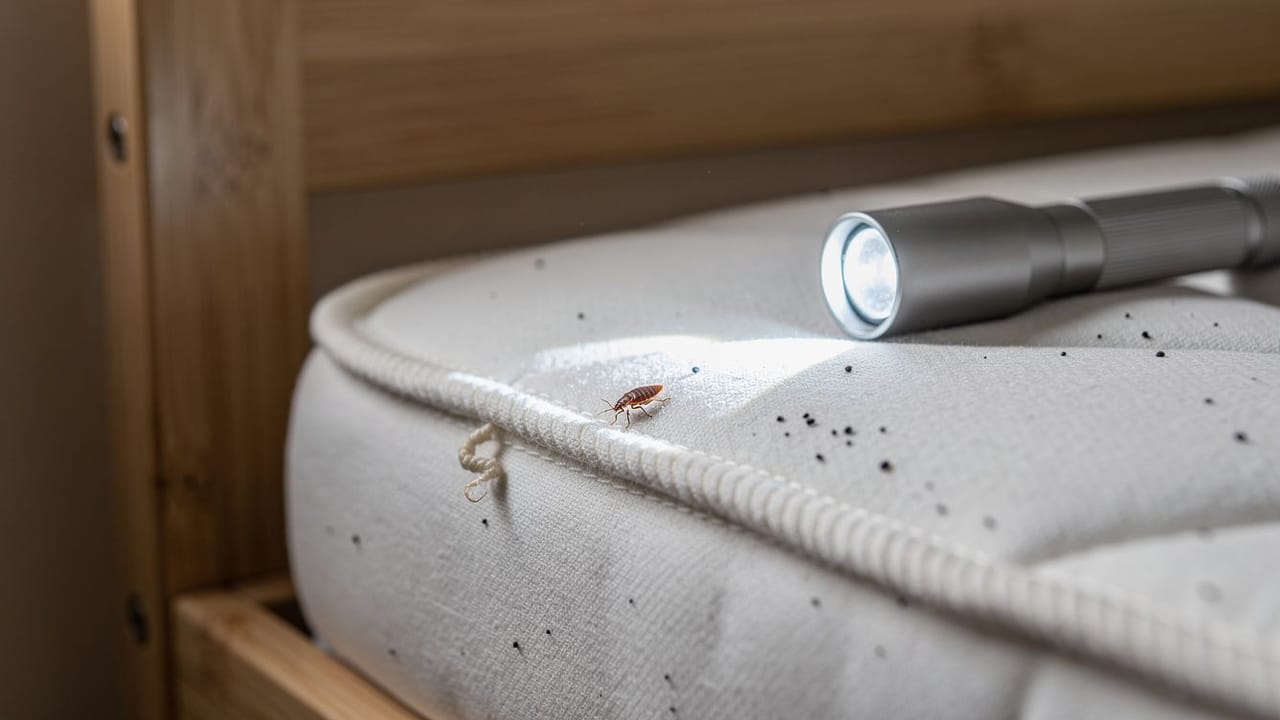
Bites alone do not confirm bed bugs; they look like many other bites, and Kentucky’s entomologists put the share of people who do not react at about 30 percent. The evidence is physical: small dark spots of digested blood on sheets and mattress seams, shed skins, tiny pale eggs in seams and crevices, and the insects themselves, flat, brown and about the size of an apple seed by the EPA’s description, in the mattress piping, the box spring, the bed frame joints and behind the headboard.
Strip the bed and check the seams and the frame with a flashlight. Check the nightstand drawers, the baseboard behind the bed and the edge of the carpet. If you find them in one room, assume the adjacent rooms until proven otherwise. A pest company can confirm with a visual inspection, and some use trained dogs to find small, scattered infestations, though their accuracy in the field varies.
Do bed bug foggers work?
Foggers do not work on bed bugs. The EPA’s page on foggers explains that the pesticide has to contact the bug, and if it does not reach the cracks and crevices where they hide, they survive; a 2012 study in the Journal of Economic Entomology found over-the-counter foggers ineffective against them. Resistance to pyrethroids, the active ingredient in most consumer sprays, is widespread, as a 2011 PLoS ONE study documents. Throwing out the mattress moves the problem, since the bugs are also in the frame, the baseboards and the nightstand, and a mattress left at the curb infests whoever picks it up.
What does work at home is supportive: heat. A clothes dryer on medium-to-high heat for 10 to 20 minutes kills every life stage, by Kentucky’s figure, so bedding, clothing and anything fabric goes through the dryer and into sealed bags. Encasements on the mattress and box spring trap what is inside and remove the hiding places. Vacuuming seams and crevices removes some. None of it clears a room on its own.
- Do not fog, and do not spray consumer pyrethroids
- Dry all fabrics hot and bag them sealed
- Encase the mattress and box spring
- Do not move furniture to other rooms
How does bed bug heat treatment work?
Whole-room heat treatment uses heaters and fans to bring the room to about 120 to 130°F, monitored with sensors. In a University of Minnesota study of commercial heat treatment, eggs needed about 130.6°F to die on short exposure, while adults died at lower temperatures. It can often clear a room in one day, it reaches inside upholstery, and it leaves nothing behind. It needs preparation, since some items cannot take the heat, and it has no lasting effect, so a reintroduction the following week starts over. That is the core of our bed bug treatment.
Chemical treatment uses professional products applied to cracks, seams, frames and voids, with follow-up visits to catch nymphs hatching from eggs the first round missed. The EPA suggests rotating products with different modes of action to slow resistance. Some companies combine the two: heat for the knockdown, an insecticide for the weeks after. Either way, the treatment is only as good as the preparation.
What the homeowner has to do
The company will give a preparation list, and following it is not optional. Clutter is where bed bugs hide and where treatment cannot reach; the room has to be cleared to the point where every surface is accessible. Fabrics have to be dried and bagged before treatment and kept bagged until the treatment is confirmed to have worked. Furniture has to be pulled from walls. Items that leave the room can carry bugs with them, so nothing leaves unbagged.
Afterward, keep interceptor cups under the bed legs to catch any survivors and prove the room is clear, keep the encasements on, and know where the bugs came from so they do not come back. Inspect the luggage after every trip, and leave used upholstered furniture alone. Before signing up for any professional plan, our post on what a pest control contract should cover lists what to check, and you can ask us for a free estimate.
Sources
- University of Kentucky Entomology, ENTFACT-636: Bed Bugs — No link to cleanliness; 30 percent do not react; dogs for small infestations; dryer 10–20 minutes; heat to 120–130°F, no residual; bat and bird bugs
- EPA, Bed Bugs Appearance and Life Cycle — About the size of an apple seed
- EPA, Should I Use a Fogger? — Foggers must contact the bugs and miss the cracks where they hide
- EPA, Pesticides to Control Bed Bugs — Rotate modes of action to slow resistance
- Jones and Bryant, Journal of Economic Entomology, 2012 — Over-the-counter total-release foggers ineffective against bed bugs
- Bai et al., PLoS ONE, 2011 — Widespread pyrethroid resistance
- Kells and Goblirsch, Insects, 2011 — Lethal temperatures for adults and eggs under commercial heat treatment
FAQ
Bed Bugs: What Actually Gets Rid of Them — questions
Do I need to throw away my mattress for bed bugs?
Usually not. An encasement seals the mattress and box spring so anything inside dies, and it leaves fewer seams to hide in. It will not stop bugs crawling onto the bed from the frame or the floor, which is why the room is treated too. Discarding the mattress does not remove the bugs in the frame, baseboards and furniture, and a discarded mattress spreads them.
Is heat treatment better than spraying for bed bugs?
Heat reaches places sprays cannot, kills eggs, and can often finish in one day, but leaves no residual protection. Chemical treatment keeps working after the visit but needs follow-ups. Some companies use both. Preparation matters more than the method.
How did bed bugs get into my house?
Almost always carried in: luggage from a hotel or rental, used furniture, a guest’s belongings, or a move. The exception is the related bat and bird bugs, which can bite people when bats or birds nesting on the house leave. Knowing the source matters so the same route does not bring them back after treatment.
How long does bed bug treatment take?
Whole-room heat treatment can often clear a room in one day. Chemical treatment takes longer, because follow-up visits are needed to catch nymphs hatching from eggs the first round missed. Either way, keep interceptor cups under the bed legs afterward to catch survivors and show the room is clear.