
· by Michael Blair, Nashville's Pest Control
Most people call every roach a roach, and most over-the-counter products treat them as one problem. In a Middle Tennessee house there are really two situations. One is a large roach that lives outdoors and wanders in, usually at night and usually one at a time. The other is a small roach that lives and breeds entirely indoors. The size of the insect you saw tells you most of what you need to know about which one you have, and it decides the treatment.
How do you tell big roaches from German cockroaches?
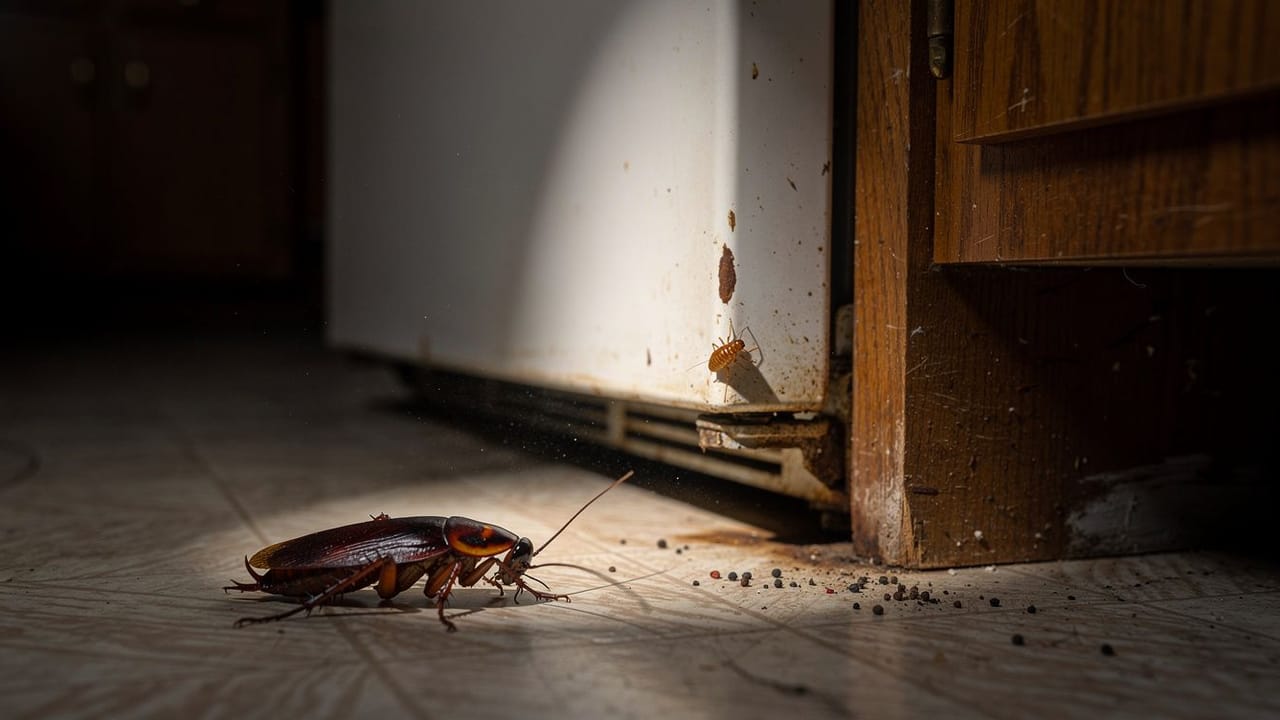
The big ones are usually American or smokybrown cockroaches, reddish-brown to nearly black and an inch or more long. The University of Florida’s smokybrown page notes it is often called a palmetto bug. The dark, shiny oriental cockroach turns up too, in cool, damp spots like crawl spaces and basements. The small one is the German cockroach: about half an inch, light brown, with two dark stripes running lengthwise just behind the head, as the University of Kentucky’s cockroach fact sheet describes it.
Where you see them matters as much as what they look like. A big roach in a bathroom, a basement stairwell or near a door is typical of an outdoor species that came in. Small roaches in the kitchen, around the dishwasher, the fridge motor or the cabinet hinges, especially in daylight, point to a German cockroach population that is already established; Penn State Extension notes they show themselves by day when the population is heavy.
- An inch or more, dark reddish-brown, seen singly at night: outdoor species
- About half an inch, tan, two stripes behind the head: German cockroach
- Small roaches seen in daytime: a large indoor population
- Egg cases or droppings like pepper in cabinet corners: breeding indoors
Where do big roaches come from?
Smokybrown and American roaches live in mulch beds, woodpiles, tree holes and storm drains, and in dark, damp crawl spaces. UF/IFAS’s American cockroach profile says they are rarely found in houses, wandering in for food and water or to escape extreme weather, and infestations can follow heavy rain. They come in through gaps around plumbing and wiring where it enters from the crawl space, under doors without sweeps, through foundation vents with torn screens, and up through floor drains and traps that have dried out.
That makes them an exterior and crawl-space problem. A perimeter treatment helps, but the lasting work is pulling mulch back from the foundation, drying out the crawl space, sealing pipe penetrations and fitting door sweeps. Running water into rarely used drains every few weeks keeps the trap seal full. The same exclusion work keeps out the other insects that come in as the weather cools; our post on the bugs that come indoors every October covers them.
The small ones live with you
German cockroaches do not live outdoors; Kentucky’s entomologists say the pest thrives around people but does not occur outside. They travel in: in grocery and delivery boxes, used appliances, secondhand furniture, luggage, and through shared walls in apartments and duplexes. Once inside they breed fast, the female carrying her egg case until a day or two before it hatches, and they hide in tight warm spaces close to food and water.
Spraying what you can see does very little, and foggers make it worse: Kentucky notes the ingredients tend to be repellent, scattering roaches deeper into wall voids. What works is gel bait placed in the harborage — UC IPM’s cockroach Pest Note calls gels very effective against German cockroaches — combined with an insect growth regulator, and in a 2020 study in Pest Management Science a single day of feeding on one was enough to disrupt molting in the young. Repellent sprays laid down near the bait keep roaches from eating it, so the two should not be mixed.
What that means for treatment
A quarterly exterior program is the right tool for the big outdoor species and does almost nothing for a German cockroach infestation inside the kitchen. A German roach cleanout is a targeted interior job over several weeks — the kind our general pest service does — and it is paired with the unglamorous part: food in sealed containers, crumbs cleaned from under the toaster and the stove, no pet food left out overnight, and leaks under the sink fixed.
If you are unsure what you are seeing, catch one on a sticky trap and look at it closely, or keep it for us to identify. It is the fastest way to avoid paying for a treatment aimed at the wrong insect, and you can ask us for a free estimate once you know.
Sources
- University of Kentucky Entomology, ENTFACT-614: Cockroach Elimination in Homes and Apartments — German cockroach description; does not occur outdoors; foggers scatter roaches; reduction within a few weeks
- UF/IFAS, Smokybrown cockroach — Often called a palmetto bug; 1 to 1¼ inches
- UF/IFAS EDIS, American Cockroach (EENY141) — Outdoors in hollow trees, woodpiles and mulch; rarely in houses; infestations after heavy rain
- Penn State Extension, German Cockroaches — Seen in daytime with a heavy population; sprays and foggers disperse them
- UC IPM, Cockroaches Pest Notes — Gels very effective; egg case carried until 1–2 days before hatching; treat only established populations
- Hamilton et al., Pest Management Science, 2020 — One day of feeding on a growth regulator disrupted molting
FAQ
Big Roaches or Small Ones: Which Is the Problem — questions
Does one big roach in the house mean I have an infestation?
Usually not. An occasional large roach at night is typically an outdoor species that wandered in from the crawl space, a drain or under a door, and UC IPM advises indoor treatment only for an established population, not an incidental intruder or two. Sealing entry points and reducing moisture and mulch around the house is the main fix.
Do roach foggers work?
Not on German cockroaches. Very little of the mist gets into the cracks and voids where they live, and the ingredients tend to be repellent, so the roaches scatter deeper into the walls. Penn State Extension notes this can make control harder and longer.
How long does it take to get rid of German cockroaches?
Expect several weeks. Bait does not work instantly — UC IPM says a week or longer — and Kentucky’s entomologists say a substantial reduction should be apparent within a few weeks. Sticky traps that stay empty are the sign it is done.
Why do I have cockroaches suddenly?
A big one that appears suddenly has usually wandered in from outside, sometimes after heavy rain, through gaps around pipes, under doors or up a dried-out drain. Small ones that suddenly appear were usually carried in, in grocery boxes, used appliances, secondhand furniture or luggage, or came through a shared wall.