
· by Michael Blair, Nashville's Pest Control
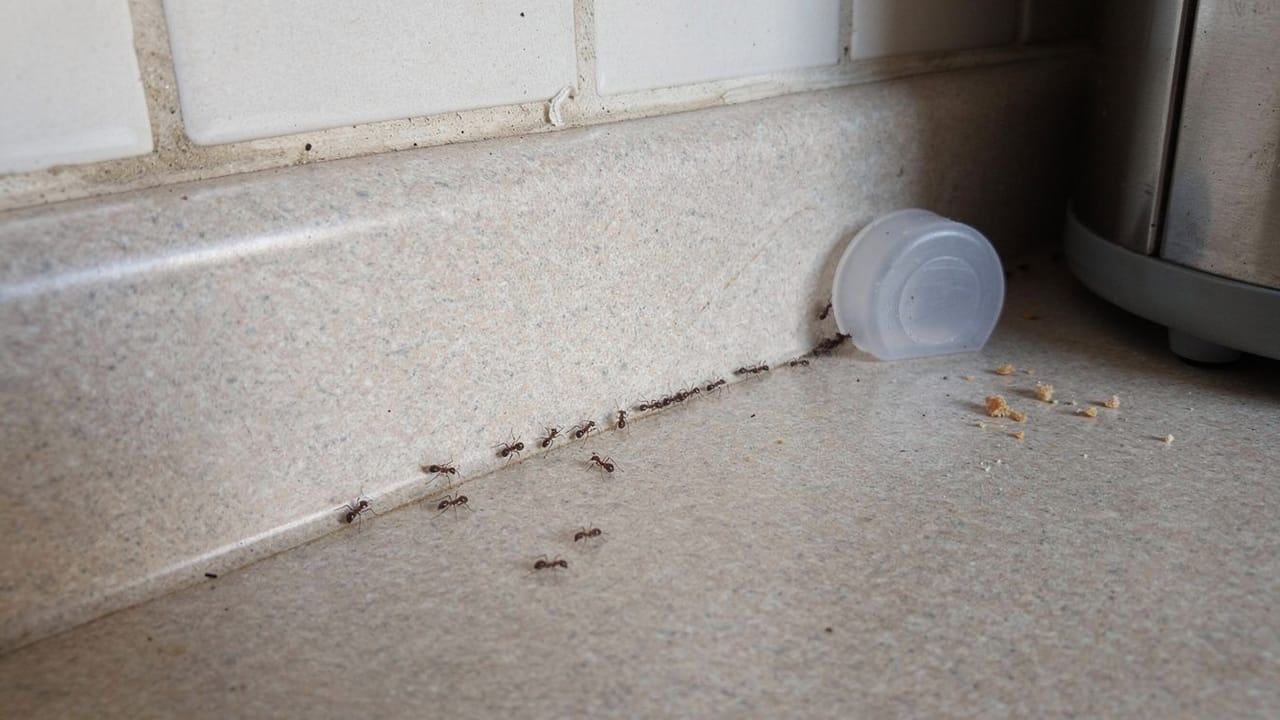
Ants on a kitchen counter are foragers — a small fraction of a colony living elsewhere. Killing them changes nothing about the colony, and with some species spraying causes it to split and multiply.
Identify before treating
Odorous house ants are a common nuisance ant in this region — University of Missouri Extension’s ant guide calls them the most common home-infesting species in that state — and Penn State Extension says baits carried back to the nest can eliminate the colony. Carpenter ants are larger, nest in damp wood and point to a moisture problem.
Fire ants are an outdoor problem with a real sting, and Davidson County is on the Tennessee Department of Agriculture’s imported fire ant quarantine list. Pharaoh ants split their colonies when sprayed with a repellent product, which makes the infestation worse.
Why does ant bait work better than spray?
Bait is carried back and fed to the queens and the brood. NC State Extension’s ant-baiting tips put it plainly: baits can kill the entire colony, whereas most sprayed insecticides kill only the workers that touch them. Expect to see ants for a week or more while it works.
Repellent sprays are the risk with pharaoh ants: Ohio State Extension’s pharaoh ant fact sheet notes that about 90 percent of the colony stays hidden in the nest, and repellent products move the colonies and spread them further through the building. Baiting and sealing are the core of our general pest service for that reason.
- Identify the species before choosing a method
- Bait rather than spray indoors
- Stop cleaning the trail until the bait has worked
- Remove food sources and fix moisture
- Seal entry points once the colony is gone
What do carpenter ants in the house mean?
They do not eat wood but excavate it to nest, and University of Maryland Extension says they start in damp or moisture-compromised wood. Finding them indoors usually means there is wood somewhere that has been wet long enough to soften.
That is often around a leaking window, a failed shower pan, or a roof leak. Treating the ants without finding the water leaves the conditions in place. If you are not sure whether it is ants or termites in the wood, our post on termite signs covers how to tell the swarmers apart.
How do you keep ants out of the house?
Trim vegetation away from the walls, since branches touching the house are a bridge. Seal gaps around pipes and wiring, and keep mulch back from the foundation; UC IPM’s ant Pest Note suggests at least a foot.
Ants come in looking for food and water, or to escape hot, dry weather or flooded ground, which in Middle Tennessee means after heavy spring rain and in late-summer dry spells. If they keep coming back after baiting, ask us for a free estimate.
Sources
- University of Missouri Extension, Ants (G7392) — Odorous house ant the most common home-infesting ant in Missouri; do not disturb trails when baiting; spraying trails splits colonies
- Penn State Extension, Odorous House Ant — Baits carried back to the nest eliminate the colony
- Tennessee Department of Agriculture, Imported Fire Ant Areas in Tennessee (2026) — Davidson County on the quarantined counties list
- NC State Extension, Tips for Effective Ant Baiting — Bait fed to queens and brood; sprays kill only contacted workers; ants seen for a week or more
- Ohio State University Extension, Pharaoh Ant (HYG-2136-10) — 90 percent of the colony hidden; repellent insecticides spread colonies
- University of Maryland Extension, Carpenter Ants — Nest in damp wood; galleries may extend into sound, dry wood
- NC State Extension, Biology and Control of Carpenter Ants — Less structural damage than termites, but significant if ignored
- UC IPM, Ants Pest Notes — Mulch a foot from the foundation; ants seek refuge from hot, dry or flooded conditions
FAQ
Getting Ants Out and Keeping Them Out — questions
Why do more ants appear after I spray?
With pharaoh ants, a repellent spray causes the colony to break apart into satellite colonies rather than dying, so you end up with several nests instead of one. Baiting works with the colony’s own behavior instead, letting foragers carry the active ingredient back to the queen.
Should I clean up the ant trail?
Not while you are baiting. Extension guidance is to place bait along active trails and not disturb them, because the trail is the route the foragers use to reach the bait and carry it home. Clean thoroughly once the activity has stopped.
Do carpenter ants damage a house like termites?
They are generally considered less damaging than termites, because they excavate rather than eat wood. They start their nest in damp wood but can extend galleries into sound, dry wood, so an ignored colony can still do real damage. Finding them indoors also usually means a moisture problem somewhere that needs fixing.
Why are ants coming in my house?
Mostly for food and water, or to get away from hot, dry weather or flooded ground; here that tends to mean after heavy spring rain and in late-summer dry spells. Branches touching the walls, mulch against the foundation and gaps around pipes and wiring give them the way in.