
· by Michael Blair, Nashville's Pest Control
Subterranean termites are the most destructive wood-feeding insects in Tennessee, as UT Extension’s publication on subterranean termite control describes them, and they work entirely out of sight. By the time damage is obvious, the colony has usually been active for years, so the early signs are worth knowing.
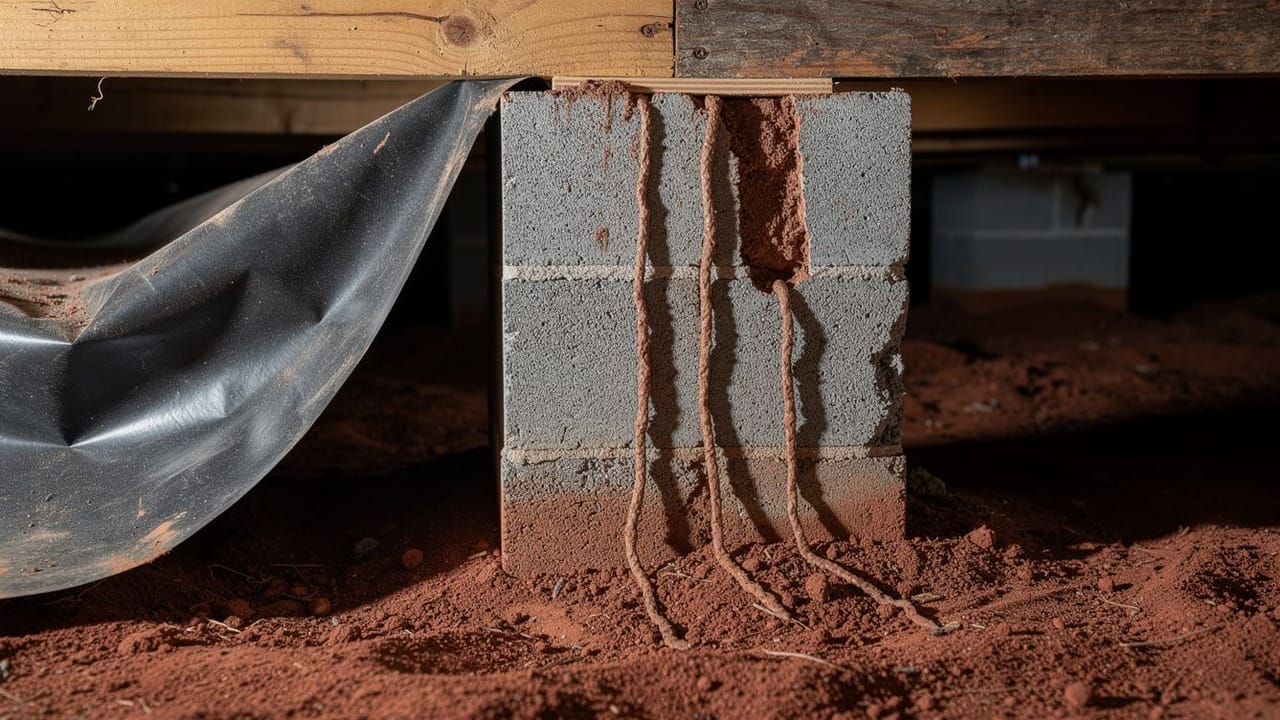
What do termite mud tubes look like?
Thin, earth-colored tubes of soil running up foundation walls, piers or the inside of a crawl space. NC State Extension’s guide to eastern subterranean termites explains that termites build them on leaving the moist soil, to keep moisture in and protect the foragers on their way to wood.
Break one open. Live termites inside means an active infestation. An empty tube may have been abandoned, but NC State cautions that it does not prove they have stopped feeding on the house, and it means the conditions suited them.
Swarmers and discarded wings
Swarms happen most often in spring and frequently after a rainstorm, though NC State’s page on termite swarmers notes they can come from late spring into summer, and colonies are active all year. Winged reproductives leave an established colony to start new ones. Finding them indoors probably means an infestation in or under the house; Penn State Extension goes further and calls swarmers or their wings indoors a sure sign.
Piles of identical discarded wings on windowsills are the classic sign, and often the wings are all you find. Termite wings are all the same length; on a flying ant the front pair is larger, and ants have a pinched waist where termites do not.
- Mud tubes on foundation walls or piers
- Swarmers indoors, especially in spring
- Piles of equal-length discarded wings
- Wood that sounds hollow when tapped
- Darkened or blistered wood on trim and framing
What does termite-damaged wood look like?
Termites eat along the grain and leave a thin surface intact, so damaged wood looks sound until pressed. UC IPM’s termite Pest Note describes it as thin at the surface and easily punctured with a knife or screwdriver, and it sounds hollow when tapped.
Darkening or blistering of wood can be another sign, UC IPM adds, and a finish that has started to ripple on baseboards or trim is worth pressing with a thumb. Ants in the wood are a different problem; our post on getting ants out covers carpenter ants and the moisture they point to.
Why crawl spaces matter here
If the house sits over a crawl space, that is where termites most often reach wood. Wood touching soil, stored lumber, scrap left after construction and a leaky pipe or standing water all invite them, and NC State points out that damp in a crawl space puts their moisture right beside their food.
NC State recommends a professional inspection every year, and the crawl space is where it happens. Our termite service starts with that inspection, and if you have found any of these signs, ask us for a free estimate.
Sources
- UT Extension, PB1344 Subterranean Termite Control — The most destructive wood-feeding insects in Tennessee
- NC State Extension, Biology and Behavior of Eastern Subterranean Termites (2025) — Mud tubes keep moisture in; abandoned tubes; crawl space moisture; annual inspection
- NC State Extension, Termite Swarmers — What Do They Mean for You? — Spring swarms after rain; indoor swarmers probably mean an infestation; wing, waist and antenna differences
- Penn State Extension, Eastern Subterranean Termites — Swarmers or wings indoors a sure sign; damage evident after years
- UC IPM, Subterranean and Other Termites — Feeding along the grain; thin surface; darkening or blistering of wood
- HUD, Appraisal and Property Requirements: Tip Zone Information — Tennessee in Termite Infestation Probability Zone 2, moderate to heavy
FAQ
Termite Signs in a Middle Tennessee Home — questions
How do I tell termite swarmers from flying ants?
Termites have a straight body with no pinched waist, straight antennae, and four wings all of equal length. Flying ants have an obvious narrow waist, elbowed antennae, and front wings noticeably larger than the back pair. The equal-length wings are the easiest tell, and they are often what you find rather than the insect.
Does swarming mean my house is infested?
Swarmers found indoors probably mean a colony is established in or beneath the structure, and some extension services treat them as a sure sign. Swarmers outdoors near the house are less conclusive but justify an inspection, because a colony close by can go on to attack an unprotected house.
How often should a Nashville house be inspected for termites?
NC State Extension recommends a professional inspection every year, and in Tennessee, which HUD rates moderate to heavy for termite infestation, that is a sensible baseline. Many companies offer an annual renewal agreement that includes the inspection after a treatment.
When is termite season?
Swarms happen most often in spring, frequently after a rainstorm, though NC State notes they can run from late spring into summer. The colonies themselves are active all year, so a swarm is only the visible moment; mud tubes and damaged wood can turn up in any month.