
· by Michael Blair, Nashville's Pest Control
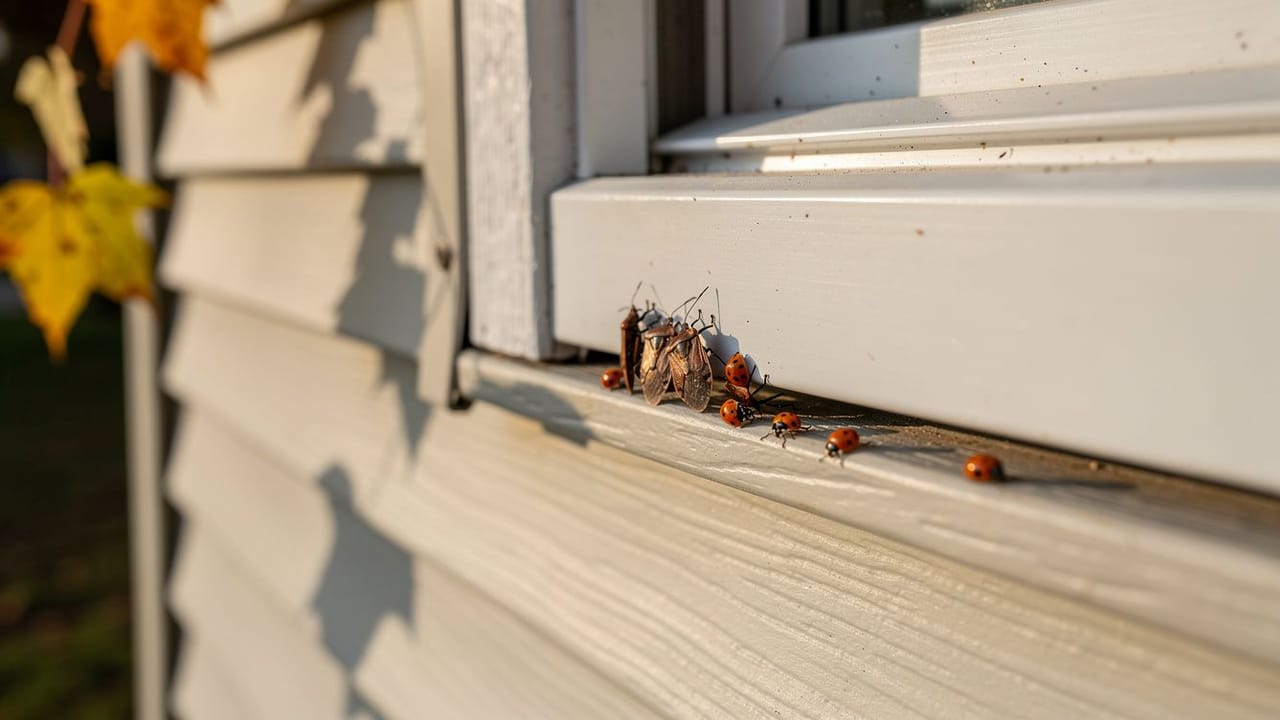
Every autumn in Middle Tennessee brings the same sequence: brown marmorated stink bugs on the sunny walls, ladybugs at the upstairs windows, camel crickets in the crawl space and spiders in the corners. These are overwintering pests rather than an infestation, and treating them as an infestation is why so much money gets spent for so little effect.
Why do bugs come inside in the fall?
Overwintering insects are looking for a protected space to spend the cold months inactive. Stink bugs move to buildings on warm sunny days in September and October, and lady beetles gather most on the south and west sides, according to University of Minnesota Extension. They get in through cracks around windows, doors, roof flashing, vents, fascia and siding, the list the University of Kentucky’s fact sheet on stink bugs in dwellings gives.
Once inside they head for wall voids and, above all, unheated attics; Kentucky’s entomologists say crawl spaces and basements are much less preferred. The ones you see in a bedroom in January have been drawn out by the warmth coming through the walls. They are not breeding indoors, and apart from the odd stink bug on a houseplant in late winter, they are not feeding on anything in the house.
Does spraying inside stop stink bugs?
Spraying the inside of the house kills the individuals you can see and does nothing about the far larger number sitting in the wall cavities. Penn State Extension’s stink bug page says a fogger will kill the ones on the ceilings and walls but will not stop more from emerging shortly after the room is aired out.
It also creates a secondary problem. Penn State notes that carpet beetles can feed on the dead stink bugs and then go on to woolens and stored dry goods in the house. The pest treatment can produce the next pest.
The treatment that works, and its window
Exclusion first: sealing the ways in. Caulk around window and door trim, screen the gable and soffit vents, fit door sweeps, seal where utility lines penetrate the wall, and repair the torn crawl space screening. Kentucky calls sealing the most permanent way to keep stink bugs and other fall invaders out, and summer the best time to do it. Ordinary hardware cloth will not stop a stink bug, so vents need fine screen. That sealing work is at the center of our general pest service.
An exterior perimeter treatment helps only a little, and only before they gather. Penn State describes it as minor relief, with a residual of several days to a week; Kentucky puts the start at early to mid September for stink bugs and says it would probably need repeating at least monthly. For lady beetles, Penn State’s lady beetle page gives late September or early October. Applied in November it is treating a wall the insects are already behind.
- Seal gaps at trim, vents, utility penetrations and the roof line
- Fit door sweeps and repair window screens
- Fine screen on vents — standard hardware cloth lets stink bugs through
- Exterior treatment just before they gather, in September
- Vacuum rather than spray or squash the ones indoors
How do you get rid of stink bugs already inside?
Vacuum them. It is the least unpleasant method, though disturbed stink bugs release their odor and the vacuum may smell of it for a while. Empty it outside afterwards.
Camel crickets are a different case and they signal something about the crawl space rather than the house. NC State Extension’s camel cricket page says pesticides are not a long-term answer and that control starts with removing harborage and reducing moisture in basements and crawl spaces. Mice are moving in during the same weeks; our post on keeping mice out covers the gaps they use. If the sealing is more than a weekend job, ask us for a free estimate.
Sources
- University of Kentucky Entomology, ENTFACT-654: Stink Bug Infestation of Dwellings — Entry points; attics preferred over crawl spaces; sealing the most permanent fix; treatment timing and monthly repeats; hardware cloth ineffective
- University of Minnesota Extension, Multicolored Asian lady beetles — Most numerous on south and west sides; do not reproduce indoors
- Penn State Extension, Brown Marmorated Stink Bug — Foggers do not stop more emerging; carpet beetles on dead bugs; exterior treatment minor relief
- Penn State Extension, Multicolored Asian Lady Beetle — Late September or early October treatment; congregate in attics, ceilings and wall voids
- NC State Extension, Camel Crickets — Pesticides not long-term; reduce harborage and moisture in crawl spaces
FAQ
The Bugs That Come Indoors Every October — questions
Do stink bugs cause damage inside a house?
No structural damage. They do not bite, they do not breed indoors and they do not damage the building. They are a nuisance and an odor problem, their droppings can stain curtains and walls, and the smell can bother sensitive people. Outdoors, they feed on fruit, garden and field crops.
When should the exterior treatment be applied?
Just before the insects begin gathering on the walls. Kentucky’s extension entomologists put that at early to mid September for stink bugs, with repeats about monthly through the flight period, and Penn State gives late September or early October for lady beetles. The same product applied in November has largely missed the event.
Why do I get ladybugs upstairs and not downstairs?
Overwintering insects prefer the upper parts of a building, often entering through the attic, and tens of thousands of lady beetles can gather in attics, ceilings and wall voids. The roof line, gable vents and upper trim are also the hardest parts of a house to inspect and seal.
Why are stink bugs in my house?
They are overwintering. Brown marmorated stink bugs move to buildings on warm, sunny days in September and October, slip in through cracks around windows, doors, vents, fascia and siding, and settle in wall voids and attics for the cold months. They do not breed indoors; the ones you see have been drawn out by warmth.