
· by Michael Blair, Nashville's Pest Control
The brown recluse is native to the central United States and Middle Tennessee is squarely inside its range; a 2009 study in the Southern Medical Journal lists Tennessee among the states where it is abundant. Attics, crawl spaces, closets full of stored boxes and gaps around the plumbing are exactly the habitat it prefers. It is a shy spider, it bites rarely and only when pressed against skin, but an established population in a house is worth taking seriously, and it responds poorly to the usual spray-and-hope approach.
What does a brown recluse look like?
A brown recluse is a uniform tan to dark brown, about the size of a U.S. quarter with its legs spread, with a darker violin-shaped mark on the back of the front body section, the neck of the violin pointing toward the abdomen. The legs are long, thin and plain, without bands or conspicuous spines, and the abdomen is a single color. It has six eyes arranged in three pairs, which the University of Kentucky’s brown recluse fact sheet calls the more definitive feature, though it takes a good hand lens to see.
The violin is not reliable on its own, and UC IPM’s recluse Pest Note warns against identifying by it. Wolf spiders are the usual mix-up; they hunt without a web, and banded legs on one are a sign it is not a recluse. Funnel weavers build a flat sheet web with a funnel-shaped retreat in a corner. A brown spider with any pattern on its abdomen or bands on its legs is not a recluse.
Where do brown recluses hide in a house?
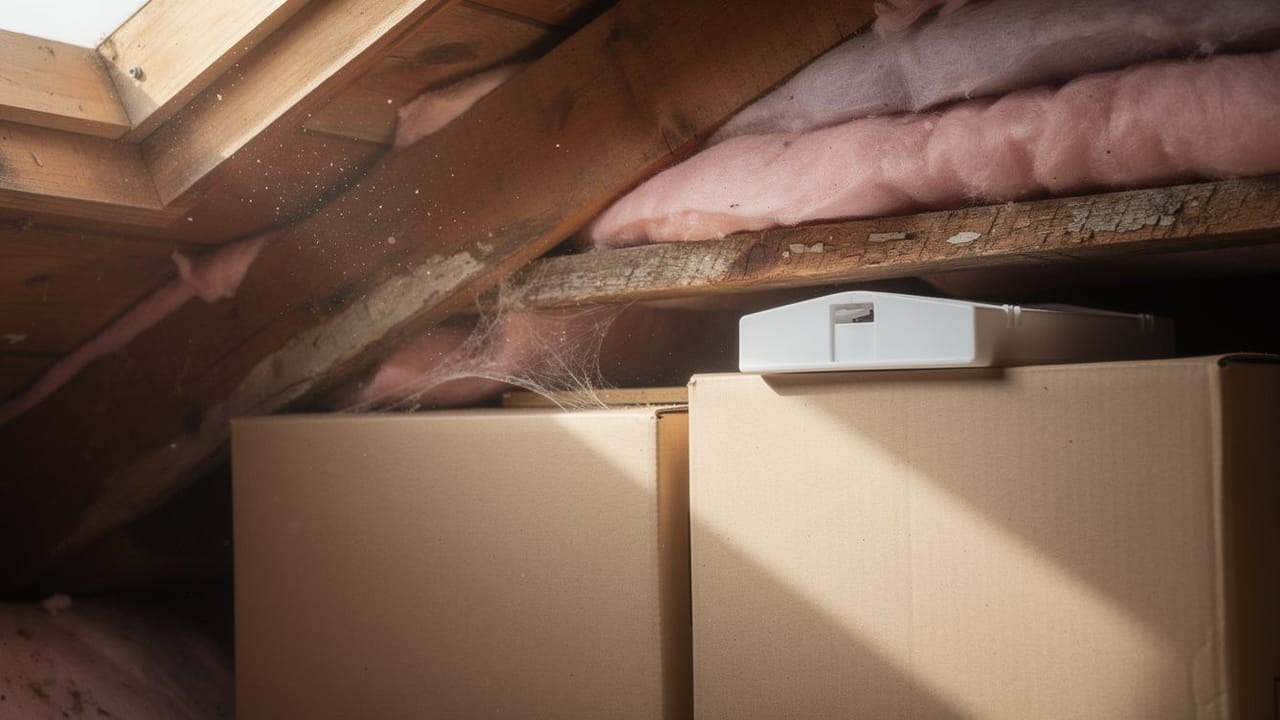
Recluses hunt at night and spend the day in dark, undisturbed places: behind baseboards and woodwork, in stored cardboard boxes, under rolled insulation in the attic, behind walls, near the water heater, in the folds of clothing left on the floor and in shoes. They line those retreats with irregular webbing rather than spinning a web to catch prey.
They move between those spaces along the edges of rooms and through the gaps around pipes and wiring. Kentucky’s entomologists find them along joists, sills and rafters in attics, basements and crawl spaces as well as in living areas, and infestations range from a few spiders to several hundred, so an inspection has to cover the whole house, not just the room where one turned up.
Why doesn’t spraying get rid of brown recluses?
Recluses are hard to kill with most insecticides, as Texas A&M AgriLife Extension’s control guide puts it, and spray on wood and masonite controlled them for only up to seven days in the trials it describes. Foggers are seldom effective. Sprays do have a place when they go into the harborages and along the foundation and siding outside, but sprayed across open floors and baseboards alone they leave the population where it is.
What works is a combination. Glue boards along baseboards, behind furniture, in closets and the attic catch the spiders as they travel and, just as usefully, show where they are coming from. Dusts reach places sprays cannot: Kentucky calls them particularly effective in cracks along baseboards, sills, joists and rafters, under insulation, and in the voids of block foundations. Direct treatment of the retreat sites found by inspection, and a reduction in clutter so there are fewer places to hide, do the rest. That is how our general pest service approaches a recluse house.
- Glue boards to monitor and to catch travelers
- Dusts into voids, the attic and around pipe penetrations
- Reduce cardboard and clutter, especially in closets and the attic
- Seal gaps around plumbing, wiring and baseboards
Living with them in the meantime
Bites happen when a spider is trapped against skin: in a bed, in a shoe, in a towel or clothing on the floor. Shaking out shoes and clothing that has been on the floor, keeping beds away from walls with bedding off the floor, and storing things in sealed plastic rather than cardboard removes most of the risk while a population is being brought down. Recluses come in through the same gaps under doors and around vents as the other fall invaders, which our post on the bugs that come indoors every October covers.
A bite that becomes an expanding sore or is accompanied by fever needs a doctor, and it helps to bring the spider if it was caught. Many conditions mimic a recluse bite, so the real thing is worth ruling out rather than assuming. If you are finding them regularly, ask us for a free estimate.
Sources
- University of Kentucky Entomology, ENTFACT-631: Brown Recluse Spider — Identification, six eyes, harborage, dusts, foggers seldom effective, bites rare
- UC IPM, Brown Recluse and Other Recluse Spiders — Violin marking not reliable for identification
- Texas A&M AgriLife Extension, Control of Brown Recluse Spiders (ENT-3003) — Difficult to kill with most insecticides; sprays lasted up to seven days
- Vetter, Southern Medical Journal, 2009 — Abundant in Tennessee and central Kentucky; absent on the Atlantic seaboard
- UT Extension (Vail), Can trapping alone eliminate brown recluse activity in a commercial building? — Eight-year Middle Tennessee study: recluses thriving under mass trapping alone
FAQ
Brown Recluses and What Actually Works — questions
How do I know if a spider is a brown recluse?
Uniform brown with a darker violin mark on the front body section, plain unbanded legs, no pattern on the abdomen, and about a quarter in size with legs spread. The six eyes in three pairs are the surest sign but need a hand lens. Any spider with banded legs or a patterned abdomen is something else. If in doubt, catch it on a glue board and have it identified.
Can brown recluses be completely eliminated from a house?
An established population is difficult to eradicate, and an eight-year UT Extension trapping study in a Middle Tennessee building found recluses still thriving under glue boards alone. That is why control combines monitoring with glue boards, dusts into voids and the attic, exclusion and less clutter, kept up over months rather than one visit.
Do brown recluses bite in bed?
Rarely, and usually when someone rolls onto one. Bites are uncommon even in houses where recluses are abundant. Keeping the bed away from the wall, bedding off the floor and no storage under the bed removes most of the opportunity. Shaking out clothes and shoes that have been on the floor is the other habit worth having.
Are there brown recluse spiders in Tennessee?
Yes. The brown recluse is native to the central United States, and a 2009 study in the Southern Medical Journal lists Tennessee among the states where it is abundant. In houses here it favors attics, crawl spaces, closets of stored boxes and the gaps around plumbing.