
· by Michael Blair, Nashville's Pest Control
The mosquitoes biting you in a Nashville yard are usually breeding close by. The Asian tiger mosquito — black with a white stripe down its back, and a daytime feeder according to the University of Florida’s profile of the species — lays its eggs in small containers and rarely flies far from where it hatched.
How much water do mosquitoes need to breed?
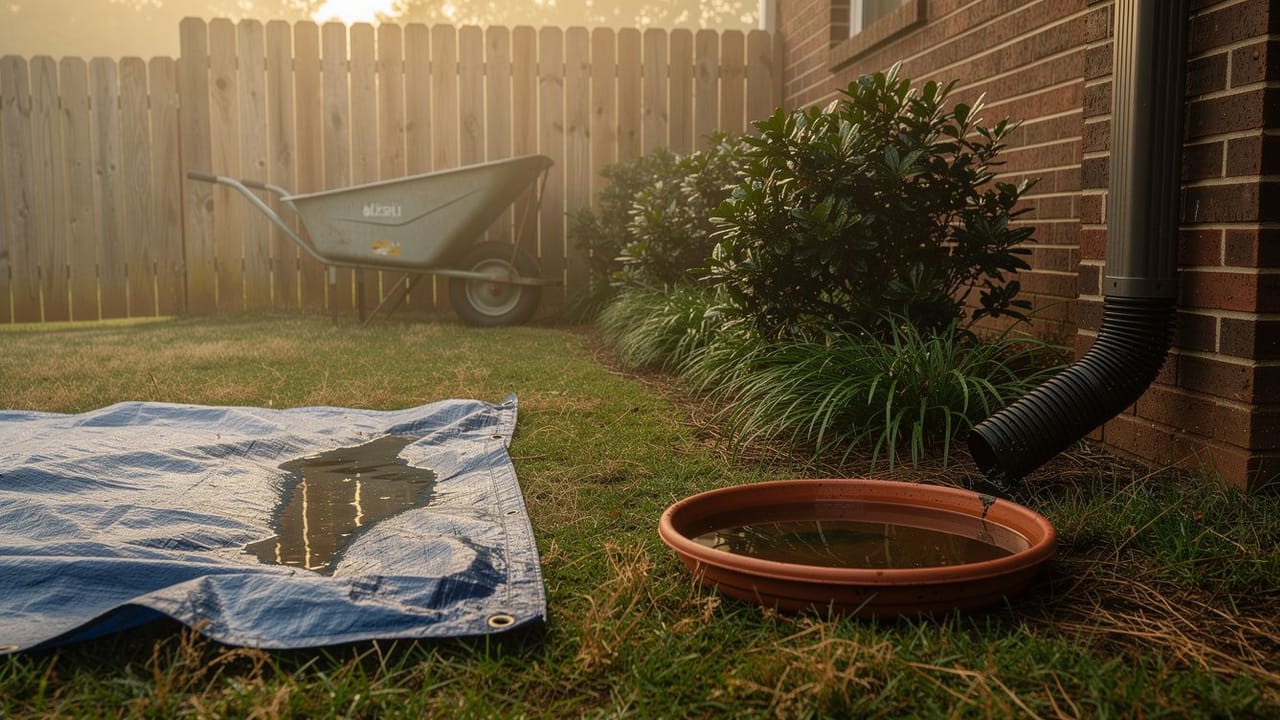
A bottle cap is enough for some species; the Fairfax County Health Department’s Asian tiger mosquito flyer lists discarded cups and bottle caps, tarps and flower pots with saucers among the places it breeds. A saucer under a plant pot, a folded tarp, a blocked gutter, a bird bath or a child’s toy can all do it.
From egg to adult takes 7 to 10 days, according to the CDC’s page on the Aedes mosquito life cycle, and in their lifetime these mosquitoes fly only a few blocks. University of Georgia entomologist Elmer Gray puts it at often no more than 100 yards, so if you have a lot of them, the water is on your property or the next one over.
Where do mosquitoes breed in a yard?
Gutters that hold water, corrugated downspout extensions, plant saucers, tarps, wheelbarrows, tires, boat covers, unused pots, and the tray under an air conditioner.
Tree holes are easy to miss. The University of Florida’s Medical Entomology Lab lists them alongside saucers, buckets, tires and bird baths as places the larvae grow. Across a street of older Nashville lots with mature oaks and maples, that adds up.
- Empty, scrub or turn over anything holding water once a week
- Clear gutters and check downspout extensions
- Turn over anything that collects rain
- Bti dunks in water features and rain barrels
- A fan on the patio
What treatments actually do
Barrier sprays treat the shaded vegetation where adults rest. They give relief that lasts weeks, not a season: UW–Madison’s Insect Diagnostic Lab says the pyrethroid products often last a few weeks or longer depending on the formulation, and notes they are broad-spectrum, so they reach other insects too. That is why our mosquito treatments start with a walk of the yard for standing water before anything is sprayed.
Larvicides containing Bti work in water that cannot be emptied, such as a pond, a rain barrel or a low spot that stays wet. The EPA’s page on Bti says its toxins only affect the larvae of mosquitoes, blackflies and fungus gnats.
Which mosquito remedies do not work?
Ultrasonic repellers have no evidence behind them; a Cochrane review of electronic mosquito repellents found no repelling effect in field studies. Bug zappers kill plenty of insects and very few mosquitoes.
Citronella candles help only slightly: in a 2009 study in the Journal of Vector Ecology, the candles repelled 14% of mosquitoes indoors. A fan is a better bet. Michigan State researchers found fan-driven wind strongly cut the number of mosquitoes reaching a trap, mostly by scattering the carbon dioxide and scent that draw them in. If wasps are the other thing keeping you off the patio, our post on wasps and hornets covers which nests to leave alone. And if the yard is still unusable after a few weeks of emptying water, ask us for a free estimate.
Sources
- UF/IFAS Featured Creatures, Asian tiger mosquito (EENY-319) — White stripe down the back; daytime feeder; eggs laid in water-holding containers
- CDC, Life Cycle of Aedes Mosquitoes — 7–10 days egg to adult; small amounts of water; fly only a few blocks
- Fairfax County Health Department, Asian Tiger Mosquito container breeding — Bottle caps, tarps, flower pot saucers; do not travel far from breeding sites
- University of Georgia CAES, Summer, Asian tiger mosquito just around corner (2005) — Often no more than 100 yards from where they hatch
- UF/IFAS Florida Medical Entomology Laboratory, Tracking Down Mosquito Problems — Tree holes among container habitats
- UW–Madison Insect Diagnostic Lab, Do mosquito yard sprays harm other insects? (2022) — Pyrethroid yard sprays last a few weeks or longer; broad-spectrum
- EPA, Bti for Mosquito Control — Affects only mosquito, blackfly and fungus gnat larvae
- Cochrane, Electronic mosquito repellents for preventing mosquito bites and malaria infection (2007) — No repelling effect in field studies
- Iowa State University Extension, Bug Zappers are Harmful, Not Helpful (1996) — 31 of 13,789 insects were biting flies (University of Delaware study)
- Müller et al., Journal of Vector Ecology 34(1), 2009 — Citronella candles repelled 14% indoors
- Hoffmann and Miller, Journal of Medical Entomology, 2003 — Fan-generated wind cuts mosquito catches by diluting attractants
FAQ
Why Your Yard Has So Many Mosquitoes — questions
How long does water need to stand to breed mosquitoes?
About 7 to 10 days from egg to adult, by the CDC’s figure, and faster in hot weather. That is why the standard advice is to empty, scrub or turn over anything holding water once a week — it breaks the cycle before adults emerge.
Do mosquito barrier sprays work?
They give real but temporary relief by treating the shaded vegetation where adults rest, typically lasting a few weeks, so they are repeated through the season. They work best alongside removing the breeding water, since a spray that leaves the containers in place is fighting a fresh supply every week.
Do bug zappers help with mosquitoes?
Very little. In a University of Delaware study reported by Iowa State Extension, only 31 of 13,789 insects killed over a summer were biting flies, a group that includes mosquitoes. Mosquitoes find people mainly by the carbon dioxide we breathe out and by body heat and skin odor, not by ultraviolet light.
How long does mosquito spray last?
A few weeks, not a season. UW–Madison’s Insect Diagnostic Lab says pyrethroid yard sprays often last a few weeks or longer depending on the formulation, so barrier treatments are repeated through the summer. They are broad-spectrum, reaching other insects too, and work best alongside removing standing water.