
· by Michael Blair, Nashville's Pest Control
Middle Tennessee has several stinging insects that get treated identically and should not be. Some defend a nest hard; others are close to harmless and useful.
How do you tell wasps, yellow jackets and hornets apart?
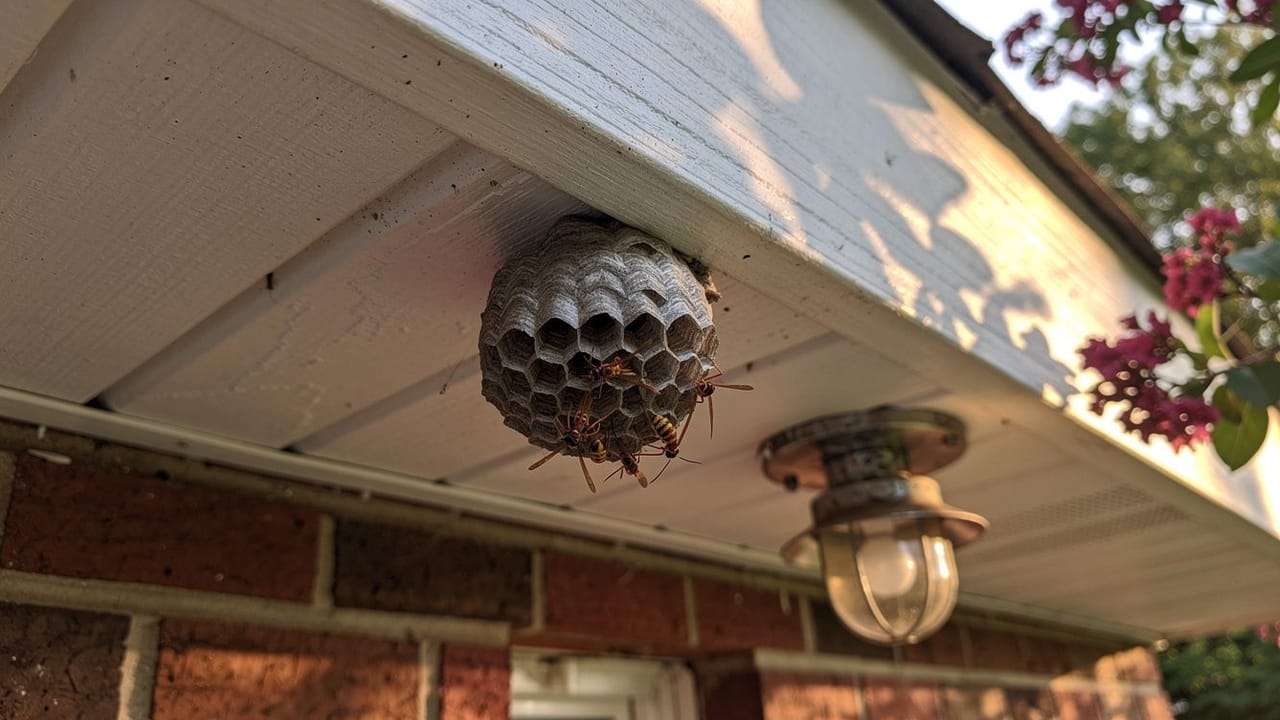
Paper wasps build open, umbrella-shaped combs under eaves and are not as defensive of a nest as hornets and yellow jackets, according to University of Maryland Extension’s guide to social wasps. Yellow jackets nest underground in old rodent burrows or in walls, attics, crawl spaces and behind siding, and UT Extension’s publication on yellowjackets in Tennessee calls them extremely defensive when the nest is disturbed.
Bald-faced hornets build the large gray enclosed nests, hung from a tree branch or fixed to an overhang, wall or utility pole, and they defend them when disturbed. Mud daubers build tubes of mud and, as UT Extension’s mud dauber publication says, rarely sting unless touched or caught in clothing.
Which wasps are worth leaving alone?
Mud daubers, which are solitary and hunt spiders. Paper wasps well away from doors and walkways, since they prey on caterpillars and other garden pests and rarely bother anyone at a distance.
Carpenter bees are a different case. They rarely sting, but Ohio State Extension’s carpenter bee fact sheet notes that woodpeckers riddle the wood hunting for the larvae, and the tunnels themselves weaken it over the years.
- Paper wasp: open comb under eaves, relatively calm
- Yellow jacket: ground or wall void, very defensive
- Bald-faced hornet: large gray enclosed nest, defensive when disturbed
- Mud dauber: mud tubes, rarely stings, leave alone
- Carpenter bee: round holes in bare wood
When should you call someone about a wasp nest?
Yellow jackets in a wall void, any large enclosed hornet nest, nests near a door or a walkway, and any situation where someone in the household is allergic. UT Extension warns that stings can be life-threatening to a person allergic to the venom. That is the work of our general pest service, and the yard’s other summer complaint is covered in our post on why a yard has so many mosquitoes.
Wall void yellow jackets in particular should not be sealed in while the colony is alive. Iowa State Extension describes wasps from a wall nest finding a back door into the living space, and UT’s method is to treat the nest opening first and seal it afterwards.
If you do treat it yourself
After dark, when most of the colony is inside and less active, which is the timing UT Extension gives. Do it from a distance, with an escape route planned, and never from a ladder. Wear covering clothing, and do not shine a flashlight straight into the entrance.
Late summer is the worst time to disturb yellow jackets: UMass Extension puts peak colony numbers around Labor Day. If the nest is in a wall or over a door, ask us for a free estimate instead.
Sources
- University of Maryland Extension, Social wasps: yellowjackets, hornets, and paper wasps — Paper wasp umbrella comb, less defensive; baldfaced hornet nest sites; wasps prey on garden pests
- UT Extension, SP 341-M Yellowjacket Wasps in Tennessee — Nest sites; extremely defensive; allergy; treat at night; seal the last opening after treating; more aggressive in late summer
- UT Extension, SP 341-T Mud Daubers and Cicada Killers — Solitary, nonaggressive, rarely sting unless touched
- Ohio State University Extension, Carpenter Bees (HYG-2074) — Woodpecker damage; avoid painted wood; weaken structural wood
- Iowa State University Extension, Yellowjackets in the House (1995) — Wall-nest wasps finding a back door into the living space
- UMass Amherst, Yellowjackets fact sheet — Peak numbers around Labor Day; sugar foraging late in the season
FAQ
Wasps, Hornets and What to Leave Alone — questions
Should I remove every wasp nest I find?
No. Paper wasps well away from doors and walkways prey on garden pests and rarely trouble anyone at a distance, and mud daubers rarely sting unless handled. What warrants removal is anything near a doorway or path, any ground or wall-void yellow jacket colony, and large enclosed hornet nests.
Can I seal up yellow jackets in a wall?
Not while they are alive. A colony shut out of its entrance can find another route into the living space, which turns an outdoor problem into an indoor one. Wall-void colonies are treated at the entrance first and sealed afterwards.
Why are wasps worse in late summer here?
Colonies are at their largest by late summer, and by then they grow slowly or stop growing and need large amounts of sugar to feed the queen and workers, which is why they come to food and drink at outdoor gatherings. Foragers that left people alone in spring become more aggressive late in the season, which makes August and September the worst time to disturb a nest.
When should you spray a wasp nest?
At night, when most of the colony is inside and calmer, as UT Extension advises. Work from a distance with an escape route planned, never from a ladder, in covering clothing, and without shining a flashlight straight into the entrance. Late summer, when colonies peak, is the riskiest season.